
Introduction
Kitchen lighting ideas can make or break your entire remodel. Before choosing lights, check our Kitchen Remodeling Ideas Guide. Lighting is one of the most underestimated elements of kitchen design — get it right, and your kitchen glows with warmth and functionality. These kitchen lighting ideas work for every budget and kitchen size.
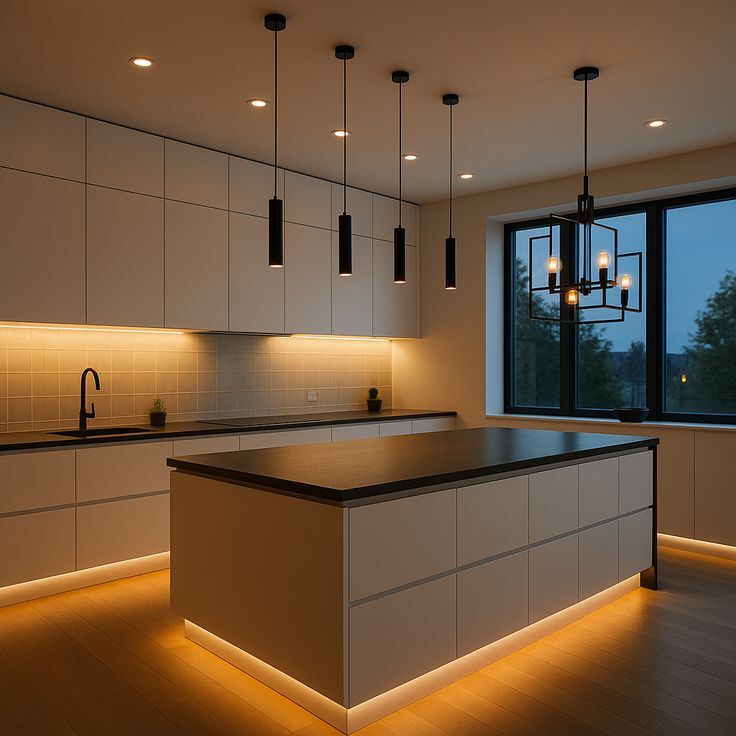
The Three Layers of Kitchen Lighting Ideas
Professional designers use three layers of light: ambient (general illumination), task (focused light for work areas), and accent (decorative and highlighting). A successful kitchen lighting plan incorporates all three layers controlled by separate dimmers for maximum flexibility.
Ambient Lighting Options
Recessed LED downlights are the most popular kitchen lighting idea for ambient illumination. They provide even, glare-free illumination across the entire room. Semi-flush and flush-mount fixtures work well in kitchens with lower ceilings. Always size your fixtures appropriately for the room — too small and they look lost; too large and they overwhelm the space. According to the U.S. Department of Energy, LED lighting reduces energy use by up to 75%.
Task Lighting for Work Surfaces
Under-cabinet LED lighting is essential for illuminating countertops where you prep food, read recipes, and work. Plug-in puck lights are an affordable DIY option, while hardwired LED strip lights are the cleanest and most professional solution. Proper task lighting reduces eye strain and improves kitchen safety.
Pendant Lights Over the Island
This is one of the most stylish kitchen lighting ideas homeowners love. When hanging pendants over an island, follow the rule of hanging them 30–36 inches above the countertop surface. Choose a size proportional to the island — typically one large pendant or two to three smaller ones for a standard island.
Accent Lighting
Accent lighting adds depth, drama, and personality. Install LED strip lights inside glass-front cabinets to showcase dishware. Add toe-kick lighting under base cabinets for a floating effect at night. Use directional spotlights to highlight artwork, open shelving, or an architectural feature like a hood vent.
Choosing the Right Color Temperature
Color temperature is measured in Kelvin (K). For kitchens, aim for 2700K–3000K for warm, inviting light that flatters food and skin tones. Avoid cool-white (4000K+) lighting in living areas as it can feel clinical. Consistency in color temperature throughout the space is critical for a cohesive, professional look.
Conclusion
Great kitchen lighting does not happen by accident — it is planned intentionally with layers, dimmers, and the right color temperatures working together. Invest time and budget in your lighting plan and you will elevate every other element of your kitchen remodel. Use these kitchen lighting ideas to elevate every element of your remodel.